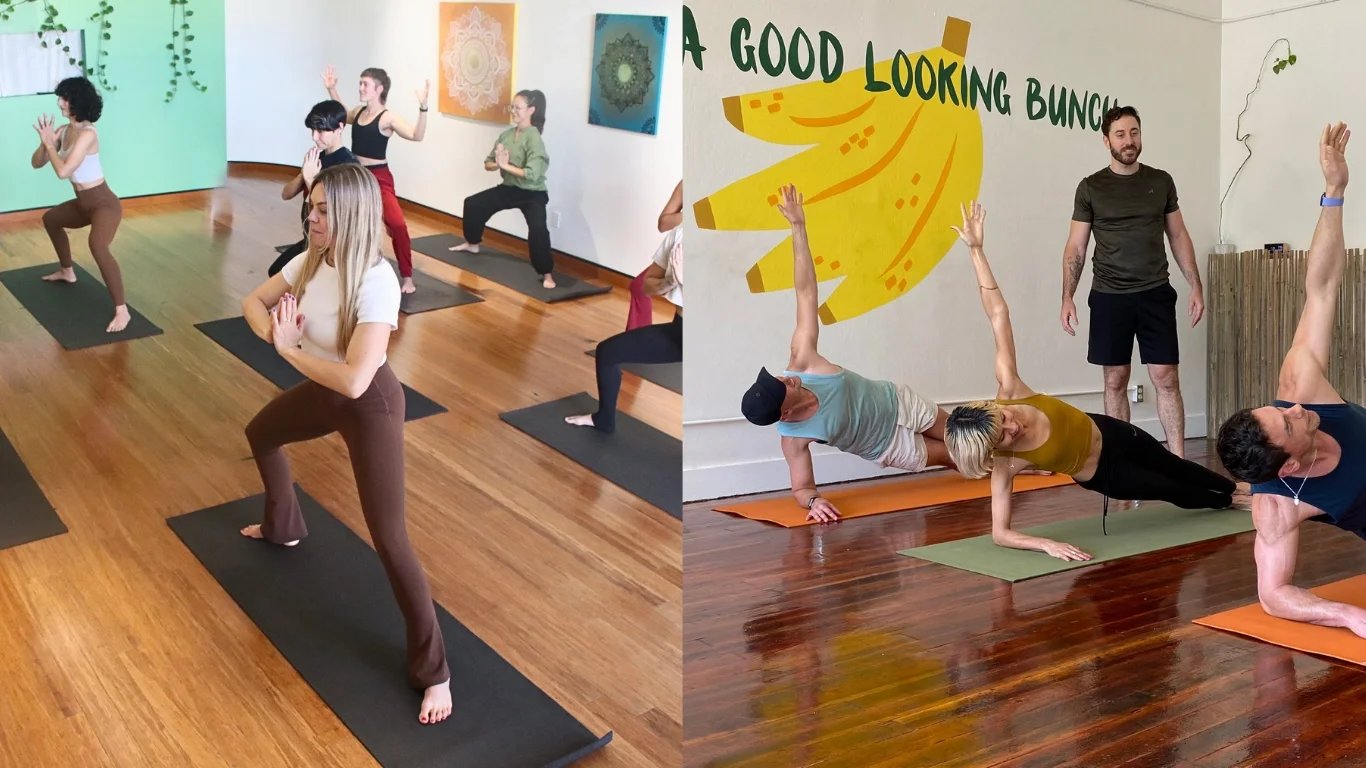
If you type “Yoga vs. Pilates” into Google, you’ll get thousands of articles breaking down muscle groups, breathwork styles, and reformer springs. They’ll tell you that both are low-impact, both work your core, and both are great for post-injury recovery.
While all of that is technically true, it misses the bigger picture.
Having taught yoga since 2018 and Pilates since 2024, I’ve experienced both practices from the inside out—not just as physical exercises, but as tools for living. And if you’re trying to decide which mat to step onto, you deserve an answer that goes deeper than simple muscle tone.
My Journey: From Panic Attacks to Mat Work
Back in 2013, long before I ever thought about standing at the front of a studio, I was suffering from intense anxiety attacks at work. I used to lock myself in the office bathroom for 30 to 60 minutes at a time, hyperventilating and crying, completely overwhelmed by my own nervous system.
A friend suggested I try a donation-based yoga class to help calm my nerves.
I went once a week, then twice a week. Slowly, the panic attacks stopped. Over time, yoga rewired how I met life’s hardest moments; it gave me a calmer, less reactive way of being in the world. In 2018, I completed my teacher training because I wanted to share this life-changing tool for nervous system regulation with others.
In 2024, I took a Pilates teacher training course out of pure curiosity. I wanted to see if the method might be a good fit for my studio. What I found was a fantastic, targeted workout. But I also noticed something crucial: it completely lacked the deep peace of mind and long-term mental resilience that yoga provided me.
Today, I still teach Pilates occasionally. But my time on both sides of the room has given me a very different perspective on how these two practices compare.
1. The Physical Focus: Aesthetics vs. Internal Function
Most people view Pilates as the “better workout,” and if your main goal is short-term muscle tone or building a defined core, that reputation is well-earned.
However, calling Pilates the better workout ignores how holistic yoga actually is. Yoga isn't just about targeting specific muscle groups; it works with your entire body as an interconnected system:
Neural Rewiring: Yoga trains the brain alongside the body, utilizing sustained postures and focused breathwork to tone the vagus nerve and calm the nervous system.
Internal Organs & Fascia: Yoga stimulates internal organs directly. For example, deep rotational twists gently compress and release the liver and kidneys, helping support your body's natural detoxification processes.
Mobility & Health: While Pilates focuses heavily on strength and control within a specific plane of movement, yoga emphasizes multidimensional mobility and fascia hydration.
2. The Mental Chemistry: The Dopamine Hit vs. Long-Term Resilience
Over the last couple of years, I’ve seen a real trend: Pilates burnout.
Many students come to my studio after pushing their bodies to the absolute limit with high-intensity Pilates formats (which, in modern fitness culture, are often a hodgepodge of barre, HIIT, and classical Pilates).
One student came to me while struggling with high anxiety and depression. She loved that Pilates was making her visually stronger, but her physical body was exhausted, and her mental health wasn't improving. I suggested she transition to a regular yoga practice. Yoga provided the strength work she wanted, but added crucial mobility while gently rewiring her neural pathways.
Here is the truth about how they affect your mind:
Pilates delivers a wonderful, short-term dopamine hit. You sweat, burn out muscles, and feel an immediate sense of physical achievement.
Yoga alters your brain chemistry for the long haul. It moves you out of fight-or-flight mode and builds mental flexibility that stays with you long after you roll up your mat.
Muscles fade fast, but the mental flexibility and peace yoga offers will last you a lifetime.
3. ¿Por qué no los dos? (Why Not Both?)
When students ask me point-blank, "Should I do Yoga or Pilates?" my answer is almost always: Why choose?
If you want to build strong abs, target specific muscle groups, and enjoy an energizing class, Pilates is a great option. But I always recommend supplementing your Pilates routine with yoga for sustainable, life-long health. Use Pilates to build core strength, and use yoga to restore your nervous system, lengthen your tissue, and keep your mind resilient.
How to Get Started: Finding Your Sustainable Path
If you’re new to both, here is my best advice: do your research and shop around for the right vibe.
When looking for a studio, pay attention to three things:
Level of Intensity: Does the class match where your energy levels are right now?
Inclusiveness: Do you feel welcomed, supported, and seen when you walk through the door?
Affordability: Is this a practice you can comfortably maintain week after week?
At the end of the day, you want to build a routine that feels sustainable for the long haul so you don't give up on yourself. Your body deserves to be treated well—not just for a six-week fitness challenge, but for the rest of your life.
Banana Yoga offers a wide-array of different yoga classes in North Oakland (near the Emeryville and Berkeley borders) that are affordable.
Ready to try out yoga? Try our intro offer of 2 weeks of unlimited yoga for $30, so that you can try out different classes and see which is right for you.