Yoga is for everybody, but not all yoga classes are made for every body.
Most of what we see of yoga, from studio classes to social media, is built around bodies that can bend, twist, balance, and hold big shapes. If you live with a disability, limited mobility, or an illness that causes chronic pain, you may have decided yoga just wasn’t for you.
Adaptive yoga is for you. It’s adapted to bodies that most yoga doesn’t reach. Here are the benefits I’ve seen, and the story of the teacher who showed me what adaptive yoga can do.
What is adaptive yoga?
Adaptive yoga is a gentle practice designed specifically for people with disabilities, limited mobility, or illnesses that cause chronic pain. Poses are adapted from traditional yoga, usually practiced in a chair or wheelchair, with props, lots of guidance, and hands-on support if you want it.
It’s different from a general chair yoga class. Chair yoga is wonderful for anyone, and I’d encourage nearly everyone to try it. Adaptive yoga is taught with the specific needs of people with disabilities in mind, so the pose is shaped for your body, not the other way around.
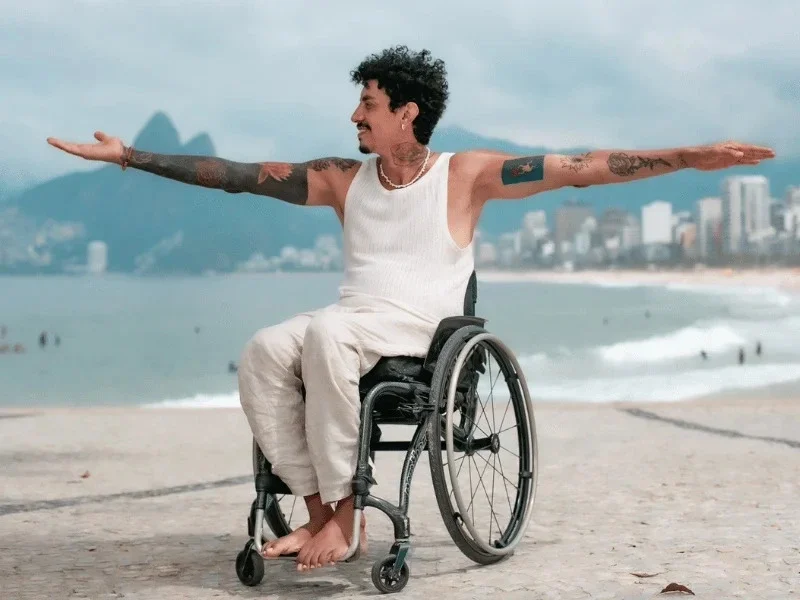
Benefit 1: Easing muscle spasms
People who live with disabilities and spend long periods in the same position often experience spasticity in their muscles. Gentle movement can help. As we move, we bring blood to the muscles in these areas and stimulate them, even if those areas are completely paralyzed.
This is a big reason adaptive yoga matters. The movements are small, but they can make a real difference in how your body feels.
Benefit 2: More space, less stiffness
Sitting or lying in one position for a long time can leave the body feeling stiff and achy. Adaptive yoga helps you create more space in your body through gentle stretching and breathing, so you feel less tight and less sore.
None of this requires big, fancy poses. Subtle movements count, and they count a lot.
Benefit 3: Community
This one surprises people. It’s deeply helpful to walk into a room full of people who are just like you.
When you see other people in wheelchairs and chairs moving and breathing alongside you, you’re reminded that you are not alone, no matter the cards life has dealt you. That sense of belonging is a benefit in itself.
Benefit 4: Self-compassion
Adaptive yoga helps us meet our bodies where they are. Rather than pushing toward a shape we think we should make, we practice noticing what’s here now and treating it kindly.
And we get to remember that we are still capable of infusing love and life into our bodies. Over time, that deepens self-compassion, which can change how you move through everything else in your life.
Rodrigo’s story
My trainer, Rodrigo Souza, became paraplegic after falling from a cliff while hiking. His life changed dramatically overnight. He was depressed at first, and he could no longer do yoga or hike the way he used to.
Then a nurse showed him some stretches to ease his muscle spasms. A light went off in his head: those stretches were yoga. He learned more about adaptive yoga from other teachers and began practicing regularly.
His friends were shocked to see him return so quickly to the joyful person they knew before his accident. People in his rehabilitation program told him, “Rodrigo, you need to share this with others.” So he did. That spark lit a fire that has led to yoga reaching hundreds of people with disabilities, and to Rodrigo leading trainings for other teachers.
I’m one of those teachers, and I’m grateful.
Who is adaptive yoga for?
Adaptive yoga is for people with disabilities, limited mobility, or illnesses that cause chronic pain. There is no level of disability required. Whether you use a cane, a chair, or a wheelchair, you are welcome. You don’t need to be flexible, and you don’t need any yoga experience.
As with any new movement practice, it’s a good idea to check with your doctor or care team if you have questions about what’s right for your body.
What’s next
We’re excited to offer a free Adaptive Yoga class at Banana Yoga in Oakland, starting Saturday, January 23, at 1pm, with ongoing classes on Saturdays from 2:30 to 3:30pm. Chairs and props are provided, and our teachers and helpers are trained in adaptive yoga. More details are coming in our next post, and you can sign up at bananayoga.co/schedule.
You don’t have to do everything. You just have to come as you are.